

Tech, Nations, and Power

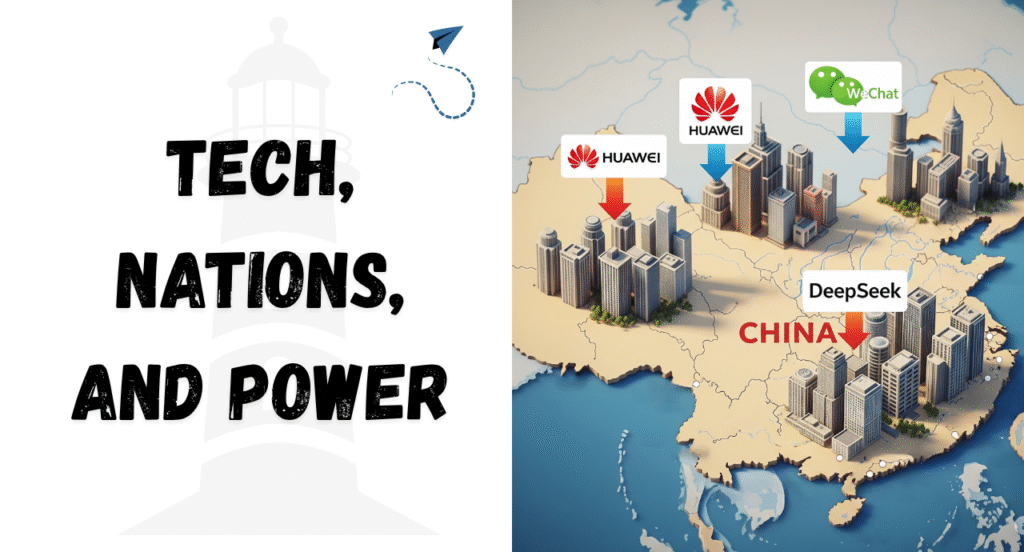
Could you ever have thought that the everyday technology we rely on, like phones and the internet, could be at the heart of a big contest between nations? One where the winner of this race will have a lot of power in the world. Well, this race is a reality. Nations are competing to develop the fastest and smartest technologies, recognizing that leadership in areas like artificial intelligence and advanced computing can significantly impact their standing in the global economy and security. One major company from China, Huawei, has played a significant role in this competition, becoming a focus of great concern for the U.S.
The U.S. government’s worries about Huawei began to become very public around 2012. That year, a group from the U.S. House of Representatives, called the House Permanent Select Committee on Intelligence (HPSCI), released a report. They believed Huawei’s technology might not be safe and could allow China’s government to secretly look at information or listen in. It was like finding out a toy you thought was safe might have a hidden camera. To protect our country’s interests, the U.S. wanted Huawei to agree to specific rules for using its products in America. However, Huawei’s leaders couldn’t agree to our strict security rules and demands for showing how their tech works. Huawei refused to give the U.S. access. They feared that giving this access might hurt their company’s technology. Because of this disagreement, the U.S. decided to stop Huawei from using its technology in America. This action caused what is known as a decoupling. This decoupling caused big problems for many companies around the world.
Without parts and materials for computer chips and other important electronic components, companies struggled to make their products on time and keep up with what people wanted. This led to lower profits and money troubles for many. Companies had to quickly find new ways to get the parts and tools they needed. For Huawei itself, this ban was a huge problem, especially because their new phones couldn’t use the Google Play Store. This made it very hard for Huawei to sell phones outside of China. So, Huawei had to change its plans. They started focusing more on selling inside China. They then began improving their own software and building technology Chinese businesses could use.
Beyond hardware companies like Huawei, China’s tech ambitions also extend to transforming its economy. Have you heard of WeChat Pay? It’s often called a ‘superapp’ because it’s truly remarkable, offering many services all in one place. For example, you can use it to message friends, post on social media, order food, or even pay bills without leaving the app. China hopes this will make them a leader in global money and help them control how money works worldwide. Digital payment systems, like WeChat Pay are at the core of China’s big plan.
Another important part of China’s push for advanced technology involves artificial intelligence. DeepSeek is a new Chinese AI program known for its skills in answering questions, writing, and even helping with computer code. It’s very strong and works superbly well, much like AI tools such as ChatGPT. The U.S. worries about Chinese AI technology, including programs like DeepSeek. This is because of national security and keeping data safe. Even if there aren’t direct bans on DeepSeek like with some of Huawei’s physical products, American companies are careful about using these Chinese AI programs.
Apps like WeChat and DeepSeek are amazing, and phones from Huawei are powerful, but they all need one key ingredient to work: a super-small computer chip. These tiny ‘brains’ are incredibly hard to make, and where they come from is creating global tension. Which country holds the key to making the world’s most important chips, and why is that so risky? We’ll tell you in the next article.


Responses